Safe = Invisible

shutterstock_421055395

Safe advertising is advertising that looks like everyone else.

Acts like everyone else.

Thinks like everyone else.

Safe advertising doesn’t rock any boats.

It doesn’t stick its head in dangerous places or venture into unchartered territory.

Safe advertising is what happens when people are afraid to take chances.

What if my immediate superior doesn’t like it?

What if everyone hates it?

The more unique and intrusive a piece of advertising, the more likely it is to generate opinion and the possibility of adverse reactions.

So fear sets in.

It’s why most car ads all look the same.

Who’s going to be the client that doesn’t show their marque vehicle – the one that’s been in development for 5-years – driving down Pacific Coast Highway 1?

Fear.

It’s same with banks, financial institutions, drug companies and airlines: the more money involved, the more expensive the product, the safer the advertising.

But surely the point of investing all this time, effort and expense is to get noticed?

To outsmart your competitors.

To surprise your audience.

That’s the way to move a needle, change a mind or make a difference.

And you can’t do that if no one sees your ad.

As Bill Bernbach said:

“If you stand for something, you will always find some people for you and some against you. If you stand for nothing, you will find nobody against you, and nobody for you.”

Waiting for the digital Bernbach

Bill 2

I came across this quote from Bill Bernbach this morning.

It’s uncannily apposite for the times we live in, especially with regard to our current obsession with data driven content marketing.

“There are a lot of great technicians in advertising.

And unfortunately they talk the best game.

They know all the rules.

They can tell you that people in an ad will get you greater readership.

They can tell you that a sentence should be this short or that long.

They can tell you that body copy should be broken up for easier reading.

They can give you fact after fact after fact.

They are the scientists of advertising.

But there’s one little rub.

Advertising is fundamentally persuasion and persuasion happens to be not a science, but an art.” 

Bernbach built his agency on the philosophy that the creative execution was just as important as the message content.

Would that the same thinking was prevalent today.

What advertising needs now more than anything is a Bill Bernbach for the age of digital.

A visionary who can instigate a change in thinking as seismic as the one that Bernbach ushered in when he first opened the doors of DDB all those years ago.

A leader who’ll champion work that buries everything that’s gone before it and, like the campaigns for Avis and VW, shows us the way forward.

I hold out hope because I can’t believe we can’t do better than the work that passes for digital content today.

Dull, uninspiring, formulaic and rote, it’s entirely akin to pre-DDB era print and television.

As an industry we can do better. We have to.

So, yes, a digital Bernbach or, better yet, a digital DDB.

A DDDB, if you will.

Alex Bogusky’s “gut-plus” plan for re-vamping CP+B sounds promising. https://bit.ly/2pCbb5d

As does a recent op-ed by BBH’s Sir John Hegarty. https://bit.ly/2DXh2fE

To be sure, there’s a void to be filled and an opportunity to be taken.

Who’ll be brave enough to step up and take it?

Past Masters: David Abbott

We live in strange times here in Adland.

Traditional distinctions of what constitutes an art director or copywriter are blurring to such an extent that nowadays the roles are almost interchangeable.

Seasoned pros are being laid off by the thousand to be replaced with “Digital Natives” – code for young and cheap.

The onus is on content rather than craft, speed rather than execution, and delivery rather than persuasion.

And we wonder why only 4% of advertising is ever remembered favorably.

As luck would have it, a new website has arrived to remind us of what we are losing in the rush to make a fast buck on a welter of ineffective banner ads

DAVID ABBOTT SAID is a tribute to a legendary ad man whose work set the gold standard for the perfectly constructed argument in print.

To those of a certain vintage he needs no introduction.

To the more youthful who’ll say, “David who?” it promises to be a revelation.

Based on an interview conducted shortly before his death in 2014, DAVID ABBOTT SAID captures a life in advertising –  from the early apprenticeship at legendary DDB in New York through to the phenomenal success of Abbott Mead Vickers.

Threaded through it all are the ads. Chivas Regal, Sainsbury’s, Volvo, VW, RSPCA and The Economist, they’re all here. Each one a lesson in wit, economy, logic and reason, as much a joy to read today as they surely were when they first graced the Sunday supplements all those years ago.

We learn that the Volvo “Weld” ad was turned down twice by the client. In the first presentation, a baby was under the car. In the second, a welder. Only after Abbott himself put himself forward did the client buy it. It duly won a ton of honors. 

Volvo 1.jpg

Of the ad, Abbott said “ Daring doesn’t have to be outrageous, it’s just things where you think, my God, I don’t think we’ll get away with this, we won’t sell it, we won’t get it through. But you do.”

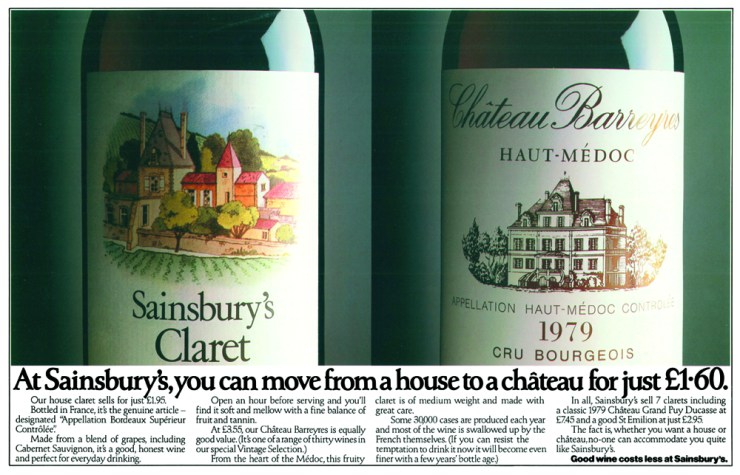
If persistence made the weld ad, it took diligence to come up with the 60+ ads that made up the Sainsbury’s campaign.

Sainsburys 2.jpg

One of my own personal favorites is the Father’s Day ad for Chivas Regal.

Chivas Regal %22To Dad%22.jpg

Today his work stands as if fixed in amber, timeless and somehow symbolic of a style of advertising that has all but vanished. 

And while this is to some degree understandable it is still nevertheless odd. 

In an age where the competition for our attention has never been greater and the response to it ever more shrill, surely the ability to make a cogent case for a product or service should be venerated? And, dare I say it, taught and encouraged.

There’s more than one way to win an argument and it doesn’t necessarily have to be built around a 15 second video “experience” on Facebook.

Whether you’re of a generation too young to have heard of him or simply want to know the man a little better, DAVID ABBOTT SAID is a chance to glean invaluable insight into the craft of copywriting

Do yourself a favor, pay it a visit today.

davidabbottsaid.com

To Fear Is To Fail

Of the 5000 or so ad messages your average punter sees every day, only about 4% are ever remembered.

200 messages out of 5000. Not many.

If you’ve got a lot riding on a campaign that’s a pretty low hit rate.

Getting into that top 200 isn’t going to easy. 

You’re going to have to fight your way in.

And your competition is pretty formidable. 

In any minute of any given day you’re going to have to overcome what’s really consuming the attention of your intended target: Life.

“Can I make the next car payment?”

“What happens if the results come back positive?” 

“Is that idiot about to pull out in front of me?” 

“Is my wife having an affair?” 

“What’s for dinner?” 

“Crap, it’s my day to pick up the kids from school.”

In this kind of environment, safe isn’t going to cut it.

It’s not enough to simply place you ad in their general vicinity and hope for the best.

You’re going to have to jump out in front of them and interrupt what they’re doing.

Tell them something fascinating, intriguing, meaningful, challenging, even outrageous.

And do it with charm, wit, the element of surprise, and a capacity for laughter, joy and tears.

It’ll take courage but it’ll get you noticed.

That’s what the 4% of remember advertising does.

Does yours?